 Free UK Delivery over £50


No. 5319
£22.99

Your shopping basket is empty!



Information
All of the insect specimens we work with are raised on farms which help to preserve valuable rainforest habitat by providing villagers an ethical income other than clearing virgin tropical rainforest.
Raising insects to sell is sometimes the only incentive some indigenous people have to save the environment they live in.
Conservation farms give rainforest communities a practical income - preserving habitat while raising specimens with far higher survival rates than the wild.
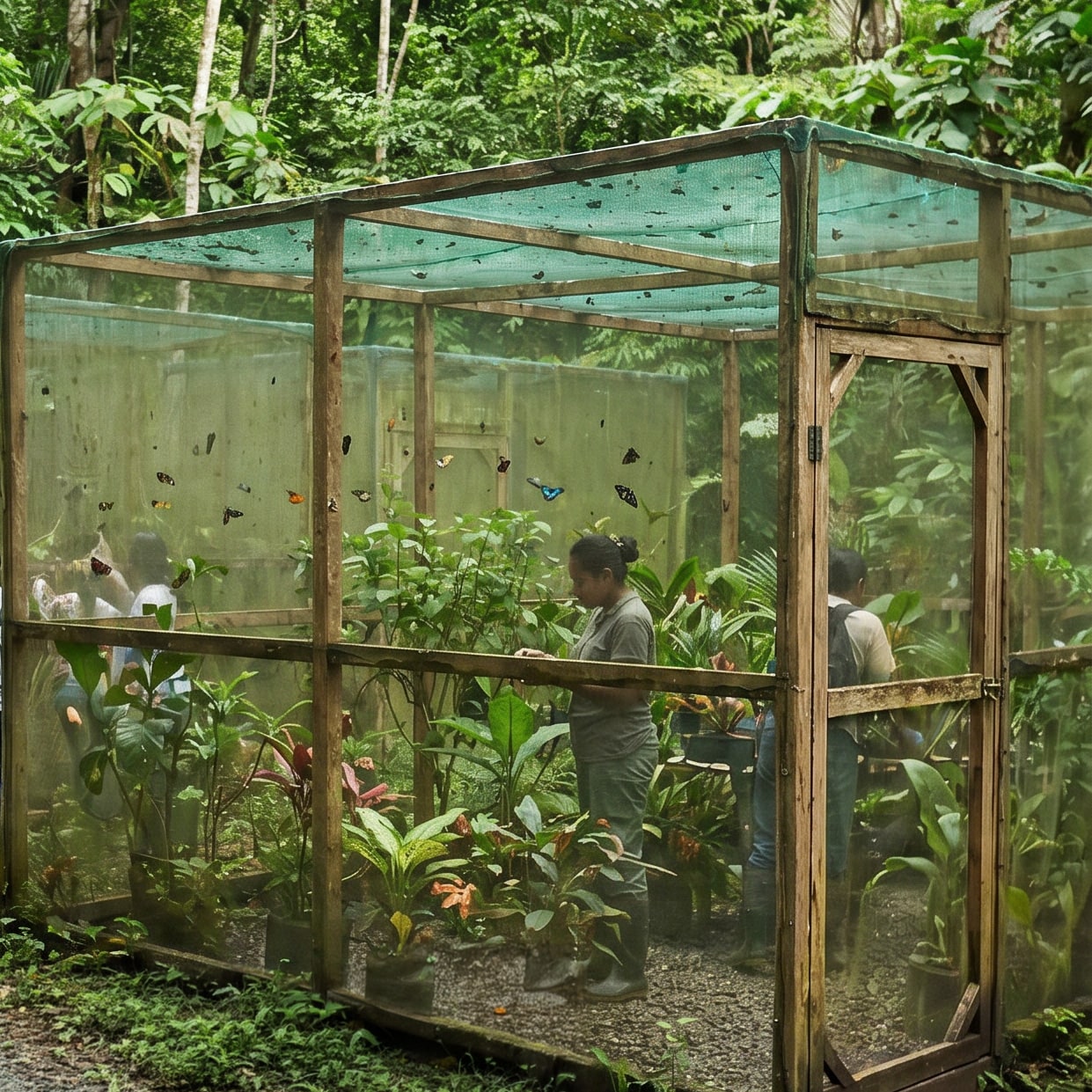
All of the insect specimens we work with are raised on farms which help to preserve the valuable rainforest habitat by providing villagers an ethical income other than clearing virgin tropical rainforest. Raising insects to sell is sometimes the only incentive some indigenous people have to save the environment they live in.
The specimens are from butterfly and insect farms in Australia, Asia, North, Central and Southern America rainforest areas which breed for insect collectors around the world.
In the wild, less than 7% of butterfly eggs will survive to adulthood. In contrast, captive breeding programs on butterfly farms achieve 70%–90% survival rates. The farms also release up to 20% of all the generation back into the wild, helping to preserve the insects in their natural habitat.
Hopefully our work will introduce some wonderful species to brighten people’s homes who otherwise would have never experienced one in the wild. These real butterfly displays are great for environmentally friendly gifts, artistic displays, teachers, scientists and private collectors.
We work with many projects and farms around the globe. Here at Minibeast we strive to source our animal pieces with as much background knowledge as possible. We only work with suppliers who collect animals that have died naturally in the wild. Many of our skulls and skeletons are found in the countryside and have died from such natural causes as being killed by a predator, illness, old age, still born or birth complications.
We also often obtain animals killed on the roads. Some bones from animals like chickens, ducks, alligators, rabbits and even snakes are a by-product of the farming industry in many parts of the world.
Ethical insect farming can make living habitat more valuable than clearing land.
Farming networks can give local people a direct economic stake in conservation.
Specimens and animal pieces are sourced with attention to background knowledge and origin.
We ensure all our specimens and animal products are ethically sourced, while highlighting how conservation farms help preserve species in the wild.
Butterfly and insect farms breed specimens for collectors while helping create an alternative income stream connected to habitat.
Captive breeding programmes can improve survival rates and release a percentage of each generation back into natural habitats.
Animal pieces are sourced through suppliers who collect naturally deceased animals, road casualties, or farming by-products.
Real displays can support artistic, educational and scientific appreciation of species many people may never encounter in the wild.
Read more about how conservation farms help preserve species in the wild.
Learn more


